Massive recruitment drive and online application system announced
The South African Police Service is set to advertise 5 500 new trainee positions before the end of June 2025, with training scheduled to begin between January and February 2026, National Commissioner Fannie Masemola has confirmed.
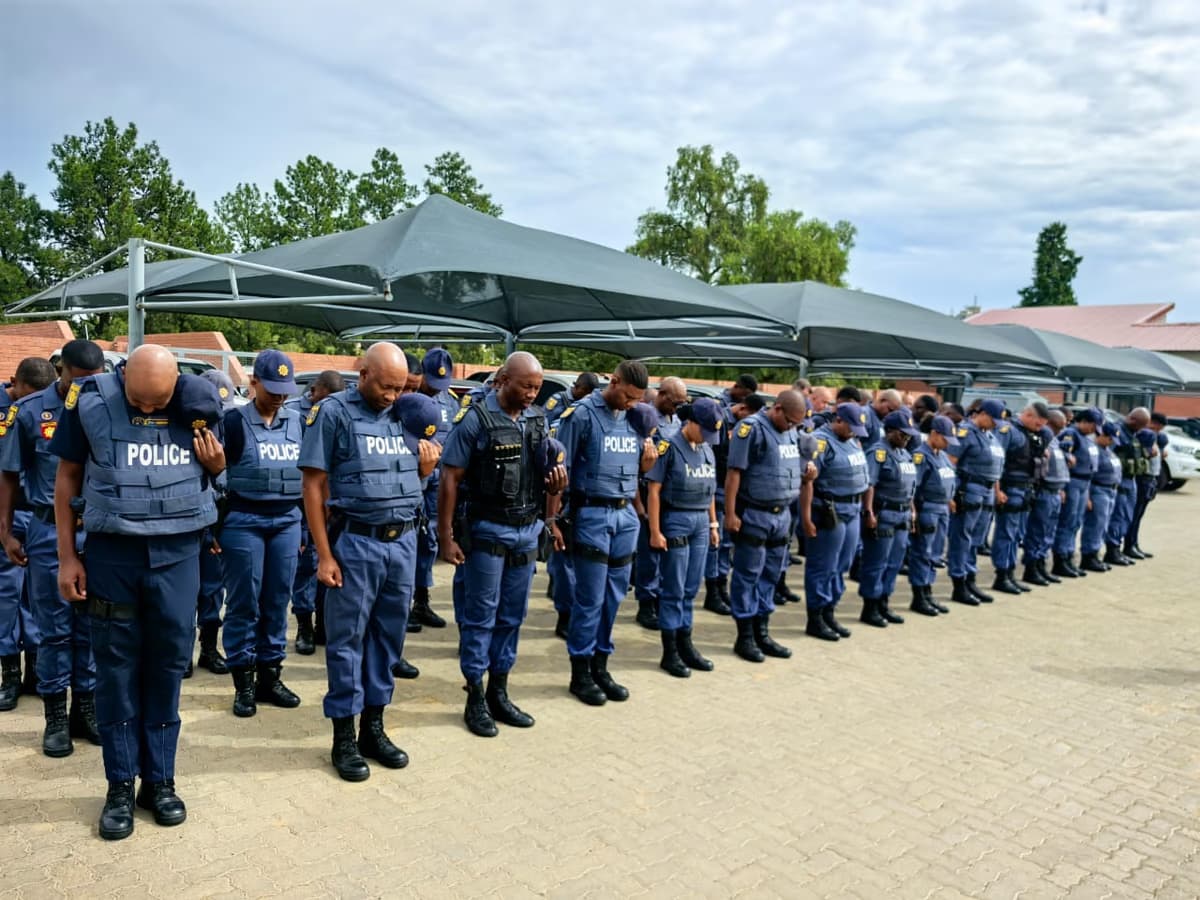
Addressing media alongside Police Minister Senzo Mchunu, Deputy Ministers Dr Polly Boshielo and Cassel Mathale, as well as representatives from POPCRU and SAPU, the Commissioner outlined a sweeping set of measures designed to strengthen policing capacity and improve conditions for officers across the country.
In a significant modernisation step, the is introducing an online electronic recruitment system for the first time in its history, replacing the traditional manual application process. The move is intended to eliminate claims that paper-based applications have been lost or misplaced during recruitment.
"We are moving away from the manual way of doing things and embracing the use of technology to tighten our control measures and enhance accountability."
The Commissioner stressed that applying to join the police service is entirely free of charge and warned scammers against exploiting hopeful applicants, noting that two civilians had previously been arrested for selling fraudulent job placements. The age limit for recruits has also been raised to 35 in line with the National Youth Policy.
A further 5 500 trainees are currently completing their training at academies nationwide, with graduations expected in August and December this year. All will be deployed to stations and units to bolster crime-fighting efforts. In the past week alone, Operation Shanela yielded 13 915 arrests, including 190 for rape and 2 041 for drug possession, while 99 illegal firearms and 82 hijacked vehicles were seized.
Detectives, specialists and scarce skills incentives boosted
More than 4 000 newly trained officers will be channelled into the detective environment this financial year, with priority deployment to the 30 police stations recording the highest levels of contact crime — predominantly in Gauteng, KwaZulu-Natal, the Western Cape and the Eastern Cape. The is also re-enlisting former officers who left in good standing and recruiting seasoned retired detectives on contract. An additional 785 investigators will reinforce the Directorate for Priority Crime Investigation to tackle organised crime and serious corruption.
"We have also listened to the outcry that more needs to be done to keep our hardworking detectives happy in a bid to retain them. We have thus taken a decision to introduce the detective investigator scarce skills allowance as an extra incentive."
The retention drive extends to high-risk units. A new scarce skills allowance has been introduced for the National Intervention Unit, which responds to cash-in-transit heists and ATM bombings, while the allowance for the Counter Assault Team is being increased. The Special Task Force's entry-level rank was last year aligned to Warrant Officer, accompanied by a raised allowance. Airborne law enforcement officers and vessel handlers at seaports will also receive scarce skills recognition.
Since 2018, more than 57 000 officers have been promoted to higher ranks, including 35 639 constables elevated to sergeant. A further 10 000 constables and sergeants who have served more than 11 years in their current rank are being considered for progression this financial year, along with 1 000 warrant officers. Over 3 149 critical supervisory vacancies will be advertised and filled, and 80 Public Service Act employees working in K9 and mounted units will be translated to the Police Service Act.
"We will continue to enforce the law without fear and favour."
Infrastructure expansion has also continued, with 31 new police stations built over the past five years, including facilities at Bolobedu in Limpopo, Qhasa in the Eastern Cape and Tafelsig in the Western Cape. The fleet of more than 43 000 vehicles is being expanded with a focus on operational environments, while garage efficiency and the recruitment of additional artisans and mechanics are being prioritised to improve turnaround times for vehicle repairs.