
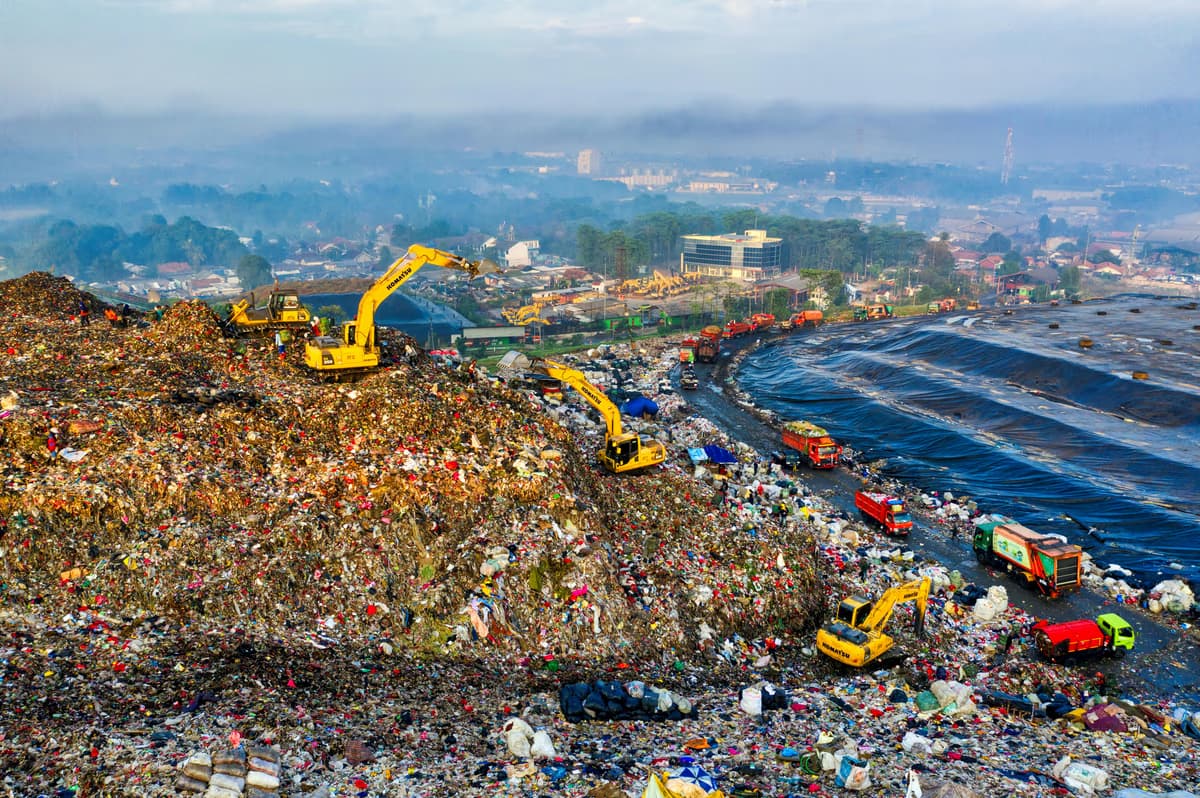
Landfill crisis looms as recycling rates lag behind
South Africa's Producer Responsibility Organisations (PROs) must dramatically step up their efforts to divert waste from the country's rapidly filling landfills, Deputy Minister of Forestry, Fisheries and the Environment Bernice Swarts declared on Wednesday.
Speaking at the annual Waste Khoro Conference in Bloemfontein, Free State, Swarts warned that the nation continues to dump more than 60% of its waste in landfill sites — a practice she described as incompatible with the country's climate and development ambitions. Several South African cities face the alarming prospect of exhausting their landfill capacity within just six years unless urgent steps are taken to curb waste generation and boost recycling.
"The PROs and their members are well-positioned to drive this shift — not only through recycling targets, but by closing material loops and designing products with end-of-life in mind."
The Deputy Minister singled out plastics and composite packaging as areas demanding particular attention under the Extended Producer Responsibility (EPR) framework. She stressed that achieving meaningful progress would require bold and decisive action from both producers and the organisations that represent them.
Waste pickers must be recognised as key players
Swarts issued a direct appeal to PROs to bolster support for Buy-Back Centres, expand materials recovery facilities across every province, channel investment into post-consumer recycling technologies, develop markets for secondary materials, and bridge the gap between informal and formal waste sectors.
Central to her address was the integration of waste pickers into formal value chains. She made clear that these workers are not passive recipients of goodwill but essential contributors to the waste economy who have spent decades recovering materials and keeping waste out of landfills without official recognition or backing.
"This includes offering fair compensation, formalised working conditions, access to equipment and protective gear, and training opportunities. Inclusive EPR is not a favour — it is an imperative for justice, efficiency, and long-term sustainability."
The Deputy Minister also called on producers and PROs to weave public education into their programmes, helping communities grasp the importance of separation-at-source, responsible disposal, and the worth of recyclable materials. She insisted that awareness campaigns must be tailored to local contexts, delivered in multiple languages, and shaped by community needs. An educated public, she argued, becomes not merely a participant in recycling but a catalyst for innovation and accountability.
"We urge all producers and PROs to embed education into their programmes — to help consumers understand separation-at-source, responsible disposal, and the value of recyclable materials."
Swarts reaffirmed the government's dedication to fostering conditions that promote innovation, transparency, and inclusive growth within the waste sector. She underscored the importance of viewing waste not as a burden but as a valuable resource and manufacturing input capable of generating employment opportunities across the country. The conference, held annually, brought together waste management officials from all three tiers of government alongside private sector representatives.